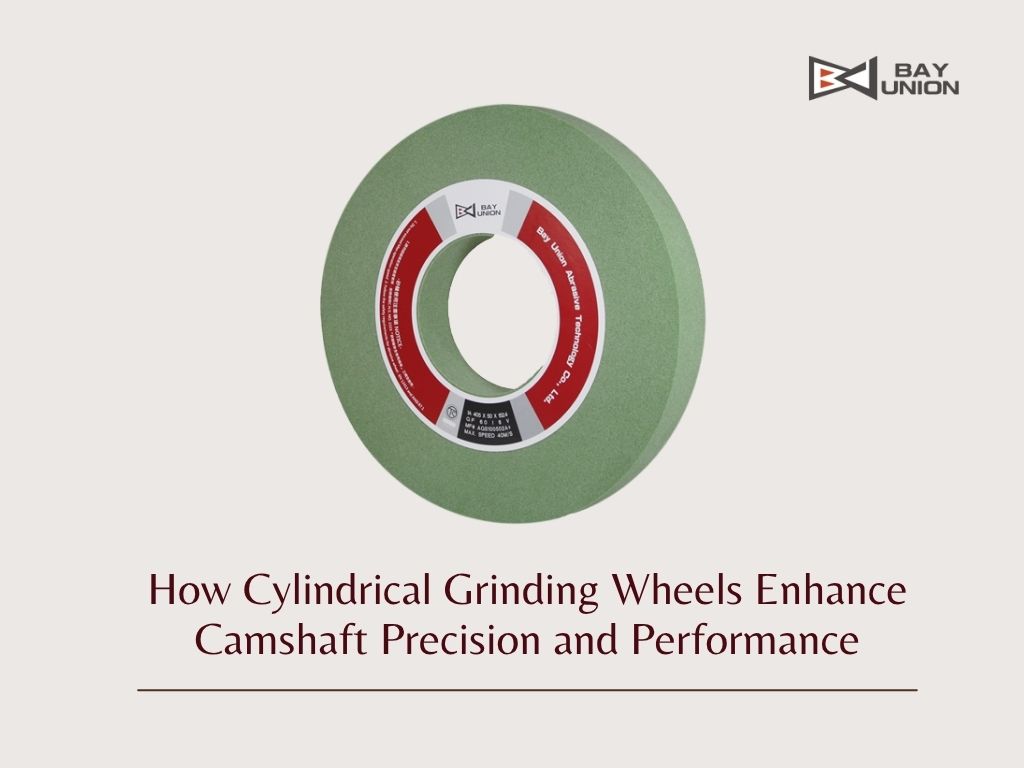
How Cylindrical Grinding Wheels Enhance Camshaft Precision and Performance
Introduction
In modern engine manufacturing, the camshaft sets the rhythm for valve timing and, ultimately, engine performance. Every lobe and journal must be ground to exact geometry and surface finish to minimize friction, ensure lubrication, and deliver repeatable durability. Cylindrical grinding wheels make this possible—providing the precision, stability, and throughput required for high-volume camshaft lines and custom performance builds alike.
At Bay Union Abrasive Technology, we design and manufacture vitrified-bond grinding wheels specifically tuned for cylindrical operations, combining fast, stable cutting with reliable form holding to help camshaft producers hit tighter tolerances with fewer adjustments.
Why Precision Matters in Camshaft Grinding
Camshafts convert rotational motion into precise valve lift profiles. Any deviation—on lobe height, base circle roundness, or flank form—can degrade power, emissions, noise, and wear. Correctly specified cylindrical grinding wheels enable:
-
Dimensional accuracy: Stable profile and diameter control across long runs.
-
Surface integrity: Low Ra values for hydrodynamic lubrication and reduced friction.
-
Process capability: Repeatable results under aggressive material-removal parameters.
Where Cylindrical Grinding Wheels Fit in Camshaft Production
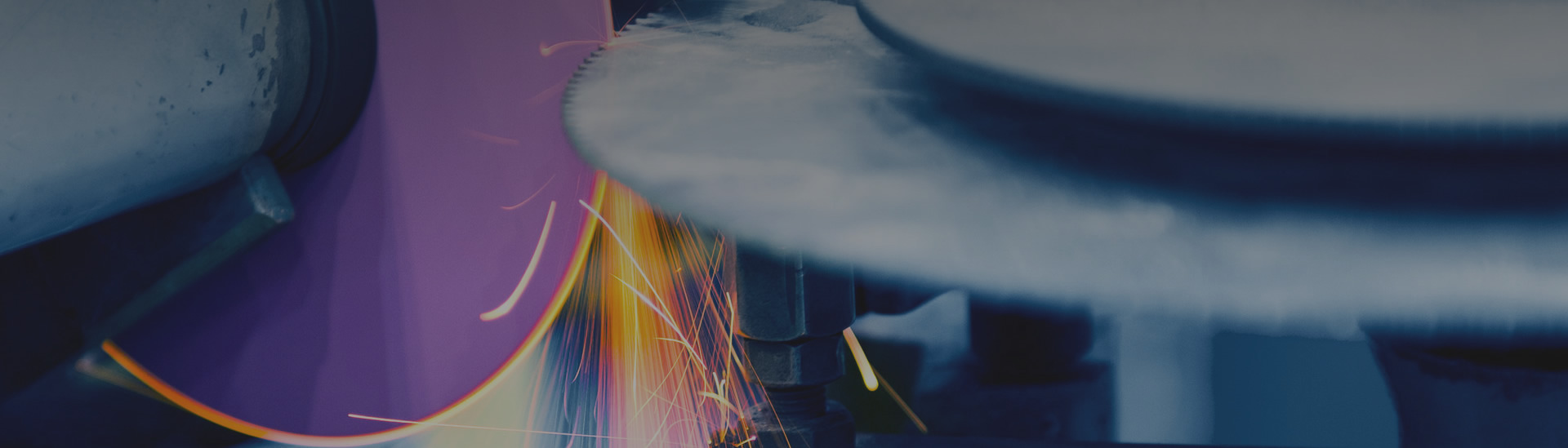
From roughing to spark-out finishing, cylindrical wheels are used to shape lobes, journals, and thrust surfaces. The right wheel structure and bond resist thermal damage, damp vibration, and maintain geometry on CNC cam grinders—reducing scrap and rework while protecting downstream hard-finishing processes (honing, superfinishing).
Selecting Wheels by Camshaft Material
Different camshaft materials require specific grinding wheel compositions to optimize results:
-
Cast Iron Camshafts: Aluminum oxide or ceramic abrasives offer a balance between sharpness and toughness, ideal for mass production.
-
Hardened Steel Camshafts: CBN (Cubic Boron Nitride) abrasives with vitrified bonds provide superior hardness and thermal stability.
-
Billet Alloy Camshafts: Hybrid bond systems help retain form accuracy while offering excellent heat dissipation during continuous grinding.
Selecting the proper bond, grit, and abrasive type ensures long wheel life, stable cutting action, and minimal thermal deformation.
Practical Setup Tips for Camshaft Lines
-
Match bond & structure to heat load: Vitrified bonds with appropriate porosity help evacuate chips and coolant, lowering grinding temperatures and preventing temper burn.
-
Use consistent dressing: A fixed-interval rotary dresser schedule maintains sharp cutting points and repeatable surface finish; adjust overlap ratio to stabilize lobe flanks.
-
Control thermal growth: Pair coolant nozzle targeting with wheel porosity to minimize thermal drift on long journals.
-
Verify profile with in-process gauging: Closed-loop feedback (diameter & form) allows earlier correction, improving Cpk on lobe height and base-circle roundness.
Camshaft Performance Outcomes You Can Measure
-
Lower friction & wear: Finer, more uniform finishes promote stable oil films across the lobe–tappet interface.
-
Stable valve timing: Better profile fidelity preserves designed acceleration ramps, improving combustion consistency.
-
Higher line efficiency: Wheels that hold form longer reduce dressing frequency and tool changes, cutting cycle time and downtime.
Bay Union's Cylindrical Grinding Wheel Solutions for Camshafts
To support both mass production and custom performance shops, Bay Union provides a focused cylindrical portfolio:
-
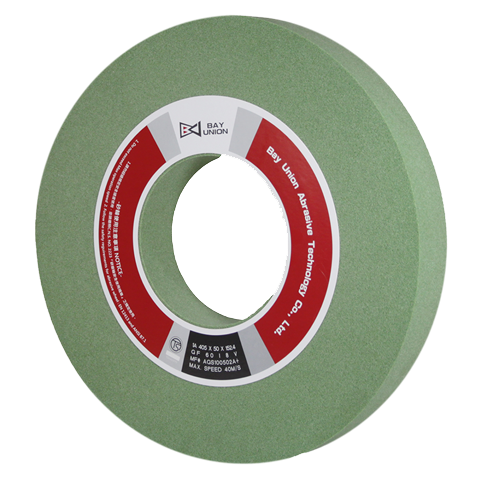
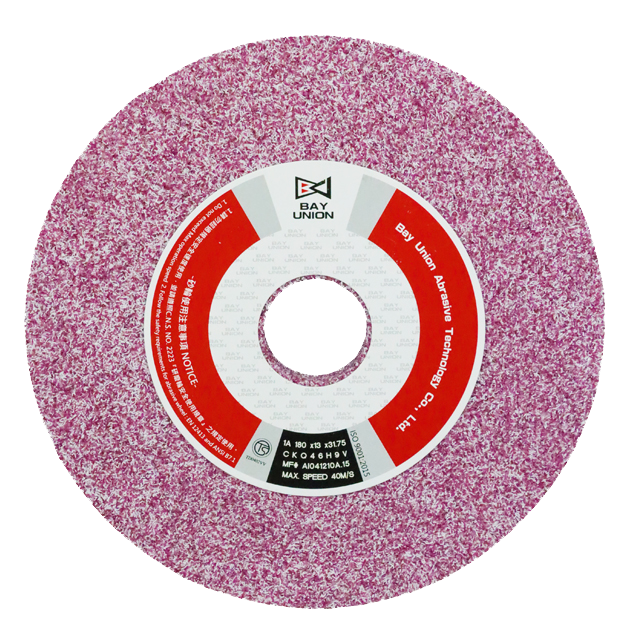
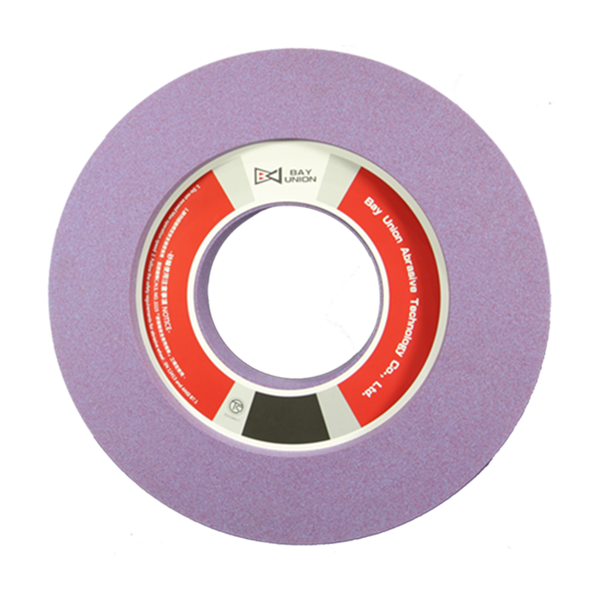
GF Series for general steels/alloys (S45C, SCr420, SNCM) where fast cutting and form retention are required across rough and semi-finish stages.
-
CK Series for harder steels (SKD, SUJ2) in heat-treated camshafts, tuned for burn resistance and consistent finish on critical lobes.
-
PP Series for high-density/tool-steel alloys (SKH/SKD) and forged cams, emphasizing wear life and geometry stability under high mechanical load.
These series reflect our core specialization in vitrified-bond grinding wheels and are backed by in-house process know-how to help you choose the right grit, grade, and structure for each cam line station.
FAQ
Q1: What's the best abrasive type for camshaft grinding?
A: For general cast iron camshafts, aluminum oxide works well; for hardened steels, vitrified CBN wheels provide excellent precision and longevity.
Q2: How often should cylindrical grinding wheels be dressed during camshaft production?
A: It depends on wheel hardness, material type, and removal rate, but typically after every few workpieces in high-precision applications to maintain surface quality and form accuracy.
Q3: How can grinding burns on cam lobes be prevented?
A: Using vitrified bonds with proper porosity and ensuring adequate coolant flow minimizes heat buildup and prevents thermal damage.
Q4: What are the signs of an improperly specified grinding wheel?
A: Excessive vibration, uneven wear, or thermal discoloration on workpieces indicate an unsuitable bond or grit combination.
Q5: Can Bay Union provide customized cylindrical grinding wheels for special camshaft designs?
A: Yes, Bay Union offers tailored grinding wheel solutions based on customer specifications, including material type, geometry, and required finish.
Conclusion
Cylindrical grinding wheels are the quiet heroes of camshaft manufacturing—defining the accuracy, surface integrity, and repeatability that engines rely on. By aligning wheel chemistry and bond with camshaft material and heat condition, manufacturers can raise throughput, extend wheel life, and protect functional performance.
If you’re optimizing a new cam line or troubleshooting burn, chatter, or form loss, Bay Union's cylindrical wheel families (GF, CK, PP) provide a proven, application-driven path to stable camshaft quality and lower total grinding cost.