
Choosing the Right Gear Grinding Wheel for Precision Gear Manufacturing
Gear grinding plays a crucial role in modern gear manufacturing, especially in applications where high precision, smooth tooth surfaces, and stable transmission performance are required. Industries such as automotive, aerospace, robotics, and industrial machinery depend on precision gears to ensure reliable motion control and power transmission.
While gear grinding machines and process parameters are important, the gear grinding wheel itself is often the key factor that determines final gear quality. Selecting the right grinding wheel — including abrasive type, bond system, and wheel structure — can significantly improve grinding efficiency, surface finish, and dimensional accuracy.
This article explores the essential factors involved in choosing the right gear grinding wheel for precision gear production.
What Is Gear Grinding?
Gear grinding is a finishing process used to achieve precise tooth geometry and high surface quality after gear cutting operations such as hobbing or shaping. During gear grinding, a specially designed grinding wheel removes a small amount of material from the gear teeth to refine the profile and correct minor deviations.
Compared with other finishing processes, gear grinding offers several advantages:
-
Higher gear tooth accuracy
-
Improved surface finish
-
Reduced transmission noise
-
Better load distribution across the gear teeth
Because the process requires extremely precise material removal, the performance of the grinding wheel becomes critical.
Key Factors When Selecting a Gear Grinding Wheel
Choosing a suitable gear grinding wheel involves evaluating several technical factors.
1. Abrasive Type
The abrasive material determines cutting ability and wear characteristics.
Common abrasives include:
-
Aluminum oxide – widely used for grinding hardened steels and general gear materials
-
CBN (cubic boron nitride) – suitable for high-hardness materials and high-efficiency grinding
-
Diamond – mainly used for carbide and ceramic materials
For many steel gears, specially engineered aluminum oxide abrasives can provide excellent grinding performance while maintaining cost efficiency.
2. Bond Type
The bond holds abrasive grains together and determines how the wheel wears during grinding.
Common bond systems include:
Vitrified bond
-
Excellent rigidity and dimensional stability
-
Suitable for high-precision gear grinding
-
Good heat resistance
Resin bond
-
Softer cutting behavior
-
Often used for certain finishing applications
Bond selection influences grinding forces, heat generation, and dressing behavior, all of which affect gear quality.
3. Wheel Structure and Chip Evacuation
Gear grinding generates a significant amount of heat and debris. If chips accumulate in the grinding zone, they can cause loading, excessive heat, or even grinding burn.
Wheel structure — including porosity and abrasive spacing — plays a critical role in allowing chips to escape and coolant to reach the contact zone.
A well-designed gear grinding wheel should balance:
-
Cutting efficiency
-
Chip evacuation
-
Dimensional stability
-
Wheel life
Challenges in Gear Grinding
Despite its advantages, gear grinding can face several common issues:
-
Wheel loading caused by chip accumulation
-
Grinding burn due to excessive heat
-
Profile errors affecting gear tooth accuracy
-
Surface finish inconsistency
Many of these problems are closely related to the design and specification of the grinding wheel. A wheel with insufficient chip space or poor abrasive exposure can quickly lead to unstable grinding conditions.
GFV Gear Grinding Wheel from BAY UNION
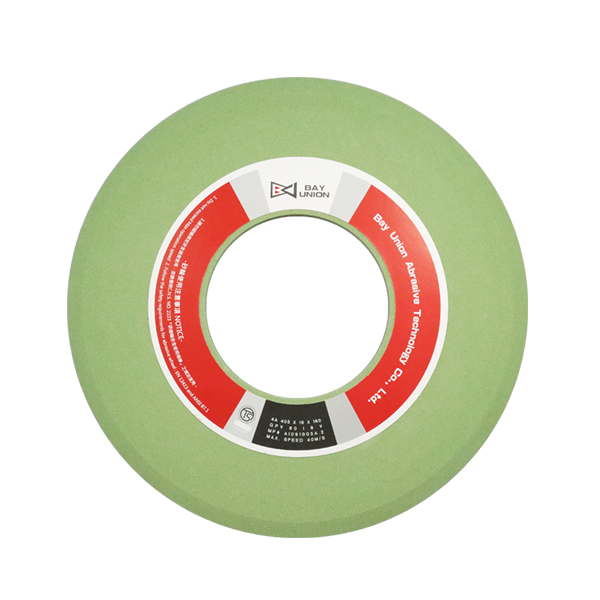
To address these challenges, BAY UNION ABRASIVE TECHNOLOGY CO., LTD. developed the GFV Gear Grinding Wheel, designed specifically for demanding gear grinding applications.
The GFV series incorporates sharp fused alumina abrasives combined with a carefully engineered wheel structure. Through a specialized low-temperature sintering process, the abrasive grains maintain a higher level of exposure, allowing the wheel to cut more efficiently while reducing grinding forces.
Another distinctive feature of the GFV gear grinding wheel is its atmospheric hole design, such as H2 and H4 structures. These engineered openings help improve chip evacuation and reduce chip clogging during grinding, which contributes to more stable grinding conditions and improved surface quality.
Thanks to these design characteristics, GFV gear grinding wheels are well suited for machining ductile metals and hardened materials, including heat-treated stainless steels such as SUS440. The wheel structure helps maintain consistent cutting performance while minimizing loading and heat buildup.
Achieving Better Gear Grinding Results
Optimizing gear grinding performance requires balancing several factors:
-
Proper grinding wheel selection
-
Stable machine conditions
-
Correct dressing procedures
-
Adequate coolant supply
Among these variables, the grinding wheel specification often has the most direct influence on cutting behavior and grinding stability.
By selecting a grinding wheel designed specifically for gear applications, manufacturers can improve both production efficiency and gear quality.
FAQ: Gear Grinding Wheels
What materials are commonly ground in gear grinding?
Most gear grinding applications involve hardened alloy steels used in automotive transmissions, industrial gearboxes, and precision mechanical systems.
Why is chip evacuation important in gear grinding?
If chips remain in the grinding zone, they can clog the wheel surface and increase grinding temperature, leading to loading and surface damage.
How often should gear grinding wheels be dressed?
Dressing frequency depends on the grinding conditions, wheel specification, and required surface finish. Proper dressing maintains cutting sharpness and profile accuracy.
Can conventional abrasives still be effective for gear grinding?
Yes. With optimized grain exposure and wheel structure, high-quality aluminum oxide abrasives can deliver excellent performance in many gear grinding applications.
Conclusion
Gear grinding is an essential process for producing high-precision gears used in modern mechanical systems. Achieving consistent accuracy, smooth surface finish, and stable grinding conditions depends heavily on selecting the right gear grinding wheel.
Factors such as abrasive type, bond system, and wheel structure all play important roles in determining grinding performance.
For manufacturers seeking reliable gear grinding solutions, BAY UNION ABRASIVE TECHNOLOGY CO., LTD. offers specialized products such as the GFV Gear Grinding Wheel, designed to support efficient chip evacuation, stable cutting performance, and high-quality gear finishing.
If you would like to learn more about selecting the right grinding wheel for your gear grinding process, contact the technical team at Bay Union to discuss your specific application requirements.