Why Vitrified Bonded CBN Wheels Outperform Conventional Grinding Wheels in Hardened Steel Grinding?
Grinding hardened steel presents unique challenges in precision manufacturing. As material hardness increases, so do grinding forces, heat generation, wheel wear, and the difficulty of maintaining dimensional accuracy. For manufacturers producing hardened components such as bearings, gears, shafts, and automotive transmission parts, selecting the right grinding wheel can significantly affect both productivity and part quality.
While conventional grinding wheels remain common in many operations, more manufacturers are turning to vitrified bonded CBN wheels to improve efficiency and consistency in hardened steel grinding. This article explains why vitrified bonded CBN wheels often outperform traditional grinding wheels in demanding hardened steel applications.
The Challenges of Grinding Hardened Steel
Hardened steel typically refers to steel that has been heat treated to achieve high hardness levels, often above HRC 55. These materials offer excellent wear resistance and strength, but they also create more difficult grinding conditions.
Common grinding challenges include:
-
High grinding temperatures
-
Rapid wheel wear
-
Frequent dressing requirements
-
Burn marks and thermal damage
-
Difficulty maintaining profile accuracy
-
Inconsistent surface finish
These issues become more severe when conventional abrasive wheels are pushed beyond their ideal operating range.
What Are Vitrified Bonded CBN Wheels?
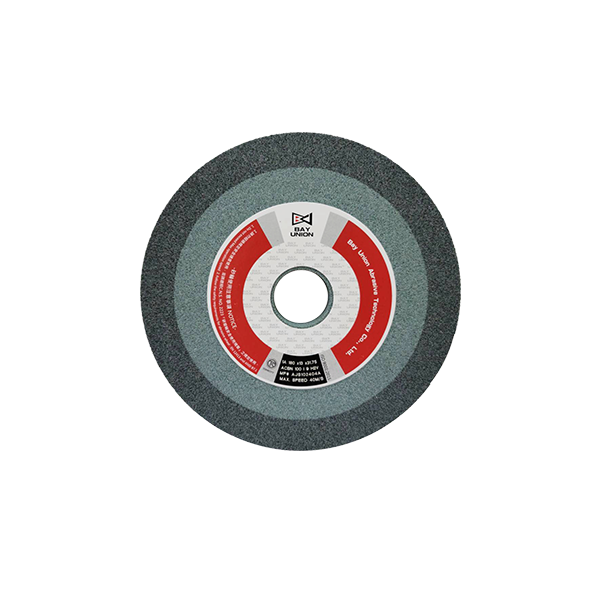
Vitrified bonded CBN wheels combine cubic boron nitride (CBN) abrasive grains with a vitrified ceramic bond system.
This combination provides a grinding solution specifically suited for hardened ferrous materials.
Why CBN?
CBN is the second-hardest abrasive material after diamond and is highly effective for grinding hardened steel because of its:
-
Excellent hardness retention
-
High thermal conductivity
-
Superior wear resistance
-
Chemical stability with ferrous metals
Why Vitrified Bond?
The vitrified bond system adds:
-
Strong form holding
-
Controlled porosity
-
Good thermal resistance
-
Consistent dressing behavior
Together, these characteristics create a wheel capable of delivering stable, high-precision grinding performance over long production runs.
Key Advantages Over Conventional Grinding Wheels
1. Significantly Longer Wheel Life
Compared with conventional aluminum oxide wheels, vitrified bonded CBN wheels typically provide much longer usable life in hardened steel applications.
Because CBN grains wear far more slowly, the wheel maintains cutting ability longer and requires fewer wheel changes.
This helps reduce:
-
Tooling costs over time
-
Machine downtime
-
Production interruptions
2. Better Form Holding and Dimensional Stability
Maintaining wheel form is critical when grinding precision hardened steel components.
Vitrified bonded CBN wheels offer superior profile retention because:
-
CBN grains resist wear
-
Vitrified bond holds shape effectively
-
Wheel geometry remains stable longer
This is especially important for:
-
Bearing race grinding
-
Gear grinding
-
Profile grinding
-
Tight-tolerance cylindrical grinding
3. Reduced Grinding Heat and Burn Risk
Grinding hardened steel generates significant heat. Excessive temperature can cause:
-
Grinding burn
-
Surface cracking
-
Metallurgical damage
-
Reduced fatigue life
Vitrified bonded CBN wheels help reduce heat through:
-
Higher thermal conductivity of CBN
-
Open porous wheel structures
-
More efficient cutting action
-
Lower grinding forces
This improves both part quality and process stability.
4. Less Frequent Dressing
Conventional wheels often require frequent dressing because abrasive grains dull quickly and wheel geometry changes during use.
Vitrified bonded CBN wheels typically require dressing less often because they maintain:
-
Sharper cutting edges longer
-
More stable wheel shape
-
Consistent grinding performance over longer intervals
Reduced dressing frequency helps improve machine uptime and lowers labor requirements.
5. Improved Surface Finish and Consistency
Stable wheel geometry and sharper abrasive grains contribute to:
-
Better surface roughness
-
More consistent finish across batches
-
Improved repeatability in automated production
This is especially valuable in industries where surface integrity directly affects part performance.
Typical Applications for Vitrified Bonded CBN Wheels
Because of these advantages, vitrified bonded CBN wheels are widely used in hardened steel grinding applications such as:
-
Bearing race grinding
-
Gear grinding
-
Camshaft and crankshaft grinding
-
Transmission shaft grinding
-
Tool steel grinding
-
Precision cylindrical grinding
These applications require a combination of dimensional accuracy, repeatability, and thermal control that conventional wheels often struggle to maintain efficiently.
BAY UNION’s Vitrified Bonded CBN Wheel Solutions
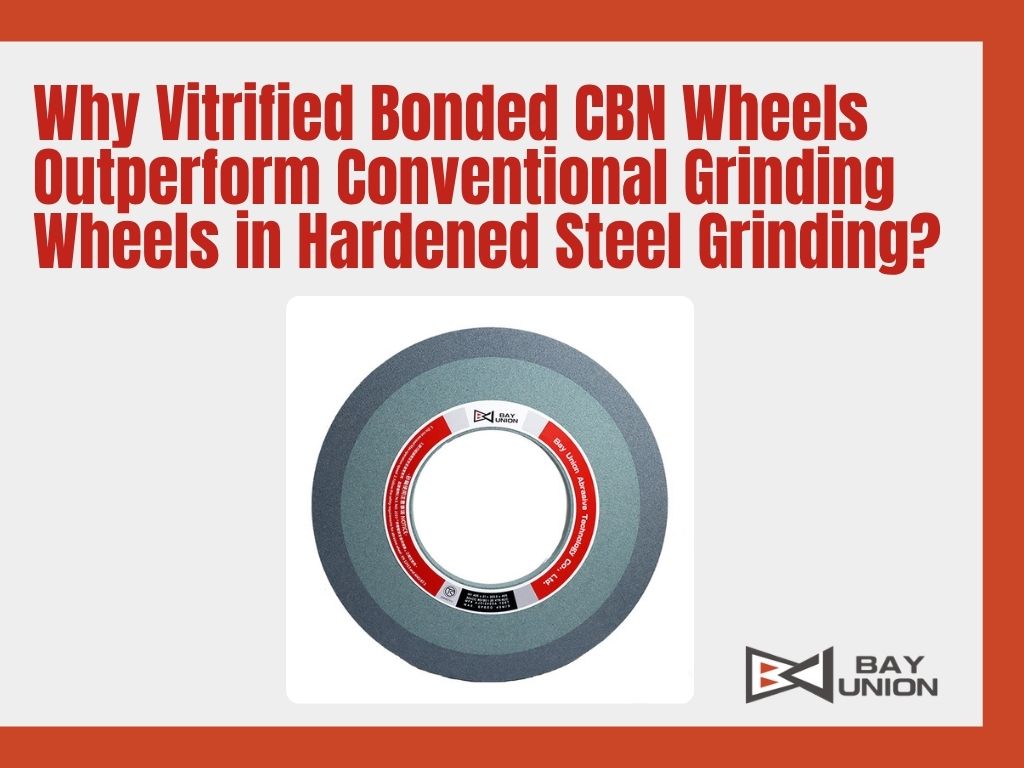
At BAY UNION ABRASIVE TECHNOLOGY CO., LTD., vitrified bonded CBN wheels are developed to support demanding hardened steel grinding applications requiring high precision and stable long-term performance.
Designed for industries such as automotive, bearing, and precision mechanical component manufacturing, Bay Union’s vitrified bonded CBN wheels offer:
-
Excellent profile retention
-
Stable porous wheel structure
-
Consistent grinding performance
-
Suitability for high-precision hardened steel grinding
These characteristics make them well suited for manufacturers seeking to improve both grinding efficiency and part quality in hardened steel applications.
FAQ: Vitrified Bonded CBN Wheels
Q1: Are vitrified bonded CBN wheels only for hardened steel?
They are primarily used for hardened ferrous materials, including hardened alloy steel, bearing steel, and tool steel.
Q2: Can vitrified bonded CBN wheels replace conventional wheels directly?
In many cases yes, but grinding parameters and machine setup may need adjustment for optimal performance.
Q3: Why are CBN wheels more expensive initially?
CBN wheels have higher upfront cost, but their longer life and improved efficiency often reduce total grinding cost over time.
Q4: Are vitrified bonded CBN wheels suitable for high-speed grinding?
Yes. Their thermal stability and structural rigidity make them highly suitable for many high-speed grinding applications.
Conclusion
For hardened steel grinding, wheel performance has a direct impact on productivity, dimensional accuracy, and finished part quality. While conventional grinding wheels remain suitable for some applications, vitrified bonded CBN wheels provide clear advantages in demanding hardened steel operations.
Their longer wheel life, superior form holding, reduced heat generation, and improved consistency make them a preferred solution for many modern precision grinding processes.
If your grinding operation involves hardened steel components and you are looking to improve process stability or reduce long-term grinding costs, BAY UNION ABRASIVE TECHNOLOGY CO., LTD. offers vitrified bonded CBN wheel solutions designed for high-performance precision grinding applications.